Talking About Lure Fishing
Since I was a child, I’ve loved fishing. Like many of my other hobbies, I’m not skilled, nor do I strive to improve, but the interest hasn’t faded over time.
I always go for simple, straightforward, and practical things (even if they aren’t always cheap). I buy as little as possible and use as much as I can. In 2021, some friends started lure fishing, which caught my attention. That winter, with the pandemic and online classes in the background, we went back to my hometown in Changsha. During my free time, I tried lure fishing.
Looking back, buying the lure fishing set (the domestic Guangwei Xiaohuang reel) might have been my biggest regret. Even though I was strongly advised “don’t buy sets” from various articles and videos, I still went with the “just give it a try” approach. If you’re a beginner thinking about lure fishing, my advice is also not to buy a set. The right approach is to check what kind of fish resources are around you, what fish you can catch, and buy a slightly better set that might hurt your wallet a bit. Obviously, this advice will mostly be ignored. 😄
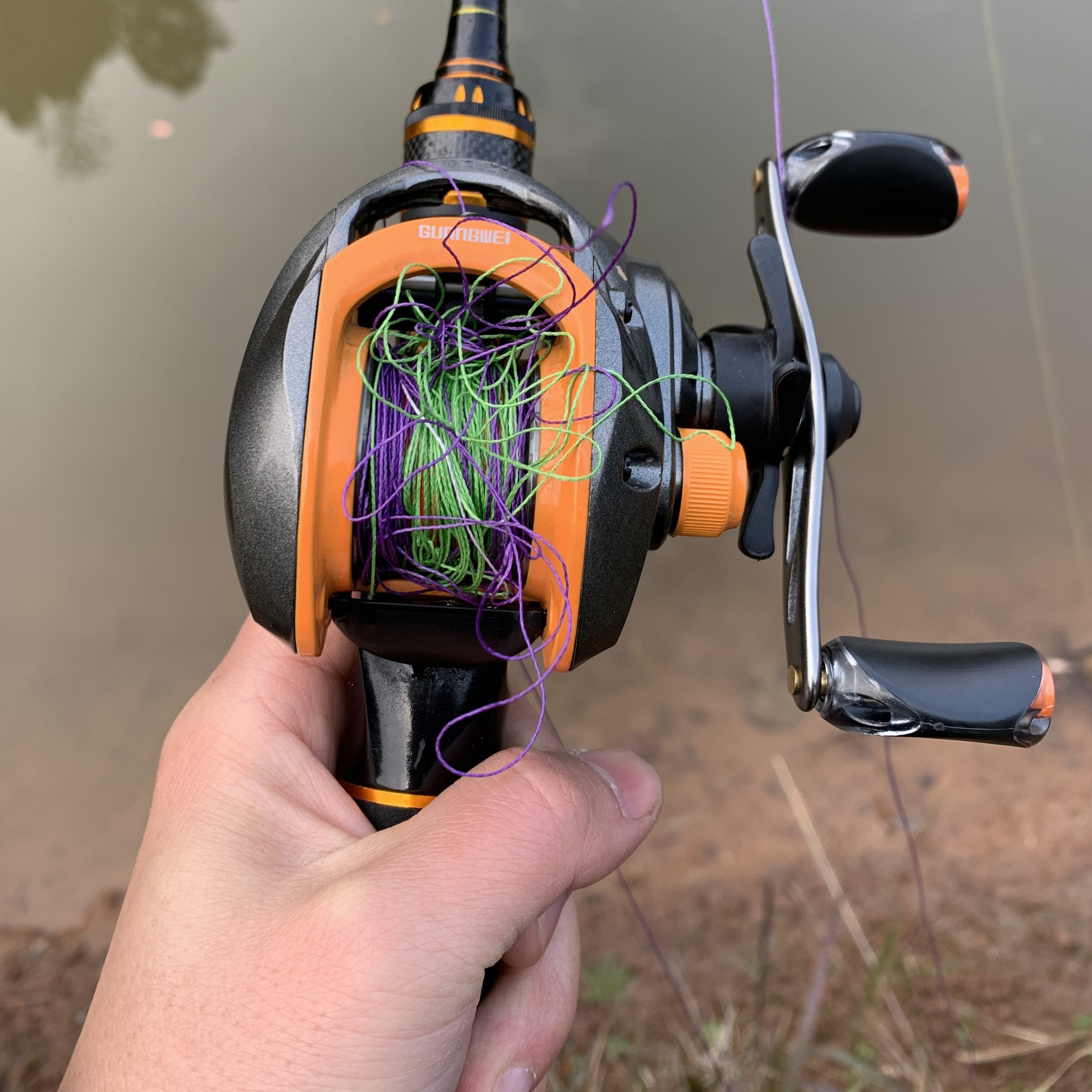
The Xiaohuang reel set snarled.
Like other hobbies and skills, getting into lure fishing takes a lot of time, effort, and money. This process includes: choosing the right gear, setting up lines/leaders/hooks, various setups for soft/hard baits, basic operation techniques, casting (overhead/side casting), preventing backlash, and untangling lines. Luckily, in Changsha, we have our own fish pond and a pay-to-fish lure area 6 kilometers away. After spending some money, I got the hang of it.
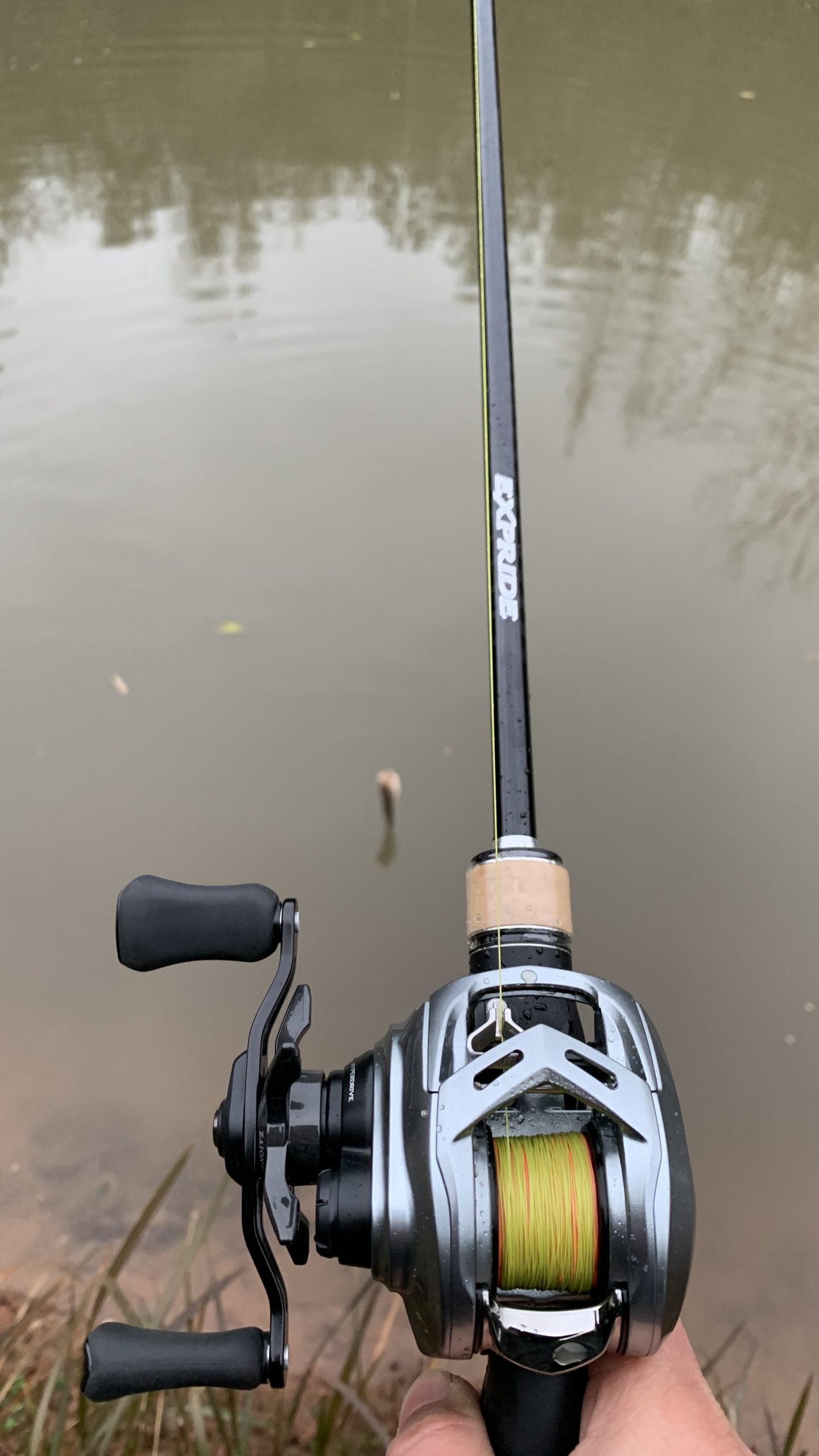
Once I could reliably catch fish at several lure ponds and avoid line snarls, I upgraded my gear. The rod and reel together cost 2600 RMB (SHIMANO Yuguang Gen II M rod, DAIWA ALPHAS Japanese reel). It seems like any modern world activity has endless equipment upgrades (like photography, biking…). So, buy within your means; enough is good. Better gear gives a better experience and handling. At least, for a basic lure fisher like me, it brings peace of mind. You won’t worry about mistakes due to poor gear, like line snarls or insufficient casting distance. Honestly, this set also boosts my confidence a bit, as it doesn’t scream “newbie” like the “Xiaohuang” set. Although, whether you catch fish isn’t directly tied to your gear.
I’ve spent a lot on lure fishing at pay-to-fish ponds. In Changsha, after fish are stocked, the first catch costs 240 RMB / 180 RMB, and the “sneaky catch” (times other than first catch) costs 100-140 RMB. I went almost every week. But thinking back, we only lived in Changsha for two months, so it wasn’t many trips—didn’t spend too much. My parents struggle to understand the expense. I get them, but I have my own views and lifestyle. Beyond basic needs, finding and nurturing a hobby is a blessing—it’s worth it. Life’s joy is in these things; otherwise, life would be too monotonous.
Traditional bench fishing involves setting a spot, putting the rod in, and watching the float for fish. Compared to bench fishing’s “stillness,” lure fishing is “active.” It’s about standing, moving around to find fish, constant casting, handling the rod/line, and feeling the fish bite directly through the rod. To me, the thrill of bench fishing is the moment you hook and reel in the fish, but lure fishing is more exciting. That extra thrill comes from feeling the fish bite through the rod—it’s like a knock at the door. The peak of fun and excitement for me is feeling the fish bite, not how many I catch or take home. A photo, a video, a social share, or a memory is enough. Conversely, the peak of bench fishing is the final count and size of fish and taking them home. Maybe this difference in excitement is part of why lure fishing promotes releasing the fish.
I joked with a friend about “abandoning wife and kids” to fish alone on weekends being too cruel, so I made lure fishing a family activity. I first taught my twelve-year-old daughter some basic lure knowledge and skills, like casting, basic operations, and what to watch out for when hooking fish. She quickly got the hang of it. Next, I taught my seven-year-old son. Last week, at a lure base near Shanghai, while guiding my son, I taught my wife basic casting (adjusting the brake to max) and techniques. After catching ten fish, she seemed hooked (pun intended).
By the way, ’lure fishing’ in English means using fake soft or hard baits to mimic small insects, fish, or shrimp to entice target fish to bite. As my daughter says, “It’s tricking fish.” Humans, they sure can be sly. But sometimes, I truly admire the person who invented lure fishing—a genius idea.