A Brief Review of 'Qin System's Two Thousand Years'
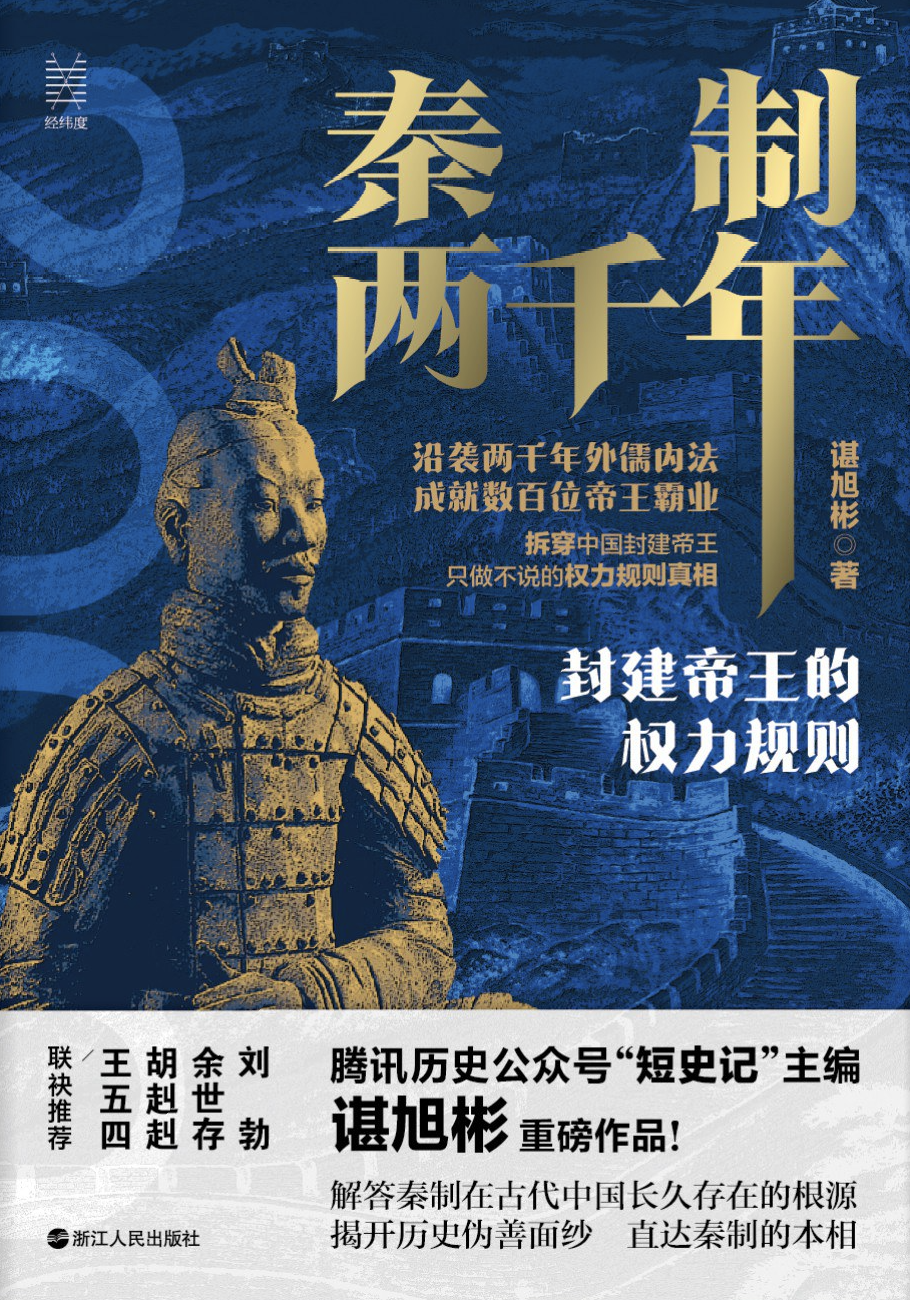
A year ago, when I read the introduction to this book, I thought it was a book destined to be banned in China. So, I immediately ordered it for my collection.
Surprisingly, the book is still around. My unreliable guess is there are two reasons. First, the book hasn’t spread widely enough to attract attention. Second, the author is very restrained and knows where the boundaries lie. For example, the first sentence of the book: from Qin and Han to Ming and Qing, this is China’s ‘Qin system era’, or rather ‘Qin governance era’. Honestly, after finishing the book, the Qin system’s strategies, policies, and methods are something we can relate to today. So, the author’s quite restrained.
I’m not really a book lover. Reading is kind of ‘heavy’ for me, not like snacking. I hardly touch history books. Partly, it’s because history classes were all about rote memorization—times, people, places, events—killing my appetite. Also, most history is written by victors; hard to tell truth from fiction. I picked up ‘Qin System’s Two Thousand Years’ on a trusted friend’s recommendation. A third of the way in, I thought: if only our history teachers had the author’s skills! Telling history is bound to times, people, places, events. But these elements, even combined, are dull without context or meaning. Reading history, the most important thing is the patterns, causes and effects, and lessons for individuals, organizations, and nations of the time. The author takes this ‘Qin system’ thread through one dynasty after another: showing the harsh decisions of rulers and common people’s struggles.
The Qin system’s core: extracting and controlling the people. From Qin to Ming and Qing (all restrained), rulers focused on building a stable, effective system to extract labor and resources. They controlled people’s thoughts, knowledge, and speech with various techniques: keeping people busy with survival, ignorance policies, speech control, neighborhood informant systems, etc. Dynasty after dynasty, the tactics were nearly identical. New dynasties, same system. How can we not sigh deeply? From Qin to Ming and Qing, 2000 years—China stuck in a historical loop. The people’s hardship. The willingness to be enslaved doesn’t end with any dynasty. It’s hard to deny that we don’t have such willingness flowing in us today. It’s a long road ahead.
The book changed my understanding of historical events. For instance, “golden ages” praised in history classes often differ greatly from what’s in textbooks. Du Fu’s poem “Remembering Past Times II” (Remember the full prosperity of Kaiyuan, Even small town households numbered a thousand. Rice flowed with fat, millet was white, Public and private granaries, all full.) is central to praising Tang Xuanzong’s “Kaiyuan Period of Prosperity”, but when Du Fu wrote it, he was in the turmoil of the An-Shi Rebellion. The beautiful lines were a post-event beautification of peaceful past days. The same Du Fu wrote “At rich men’s gates, [wine and meat go to waste, While out on the road lie the bones of the frozen poor],” revealing the true state of Tang Xuanzong’s times.
Amidst the weighty content, there are some interesting stories. For example, Liu Bang came from a “youxia” group, Tang Taizong Li Shimin spent a lifetime playing “accepting advice willingly”, and Yongzheng ran his reign through secret reports, leading to thirteen years of emperorship spent burying himself in useless reports, approving an average of 8,000 characters in responses daily. These episodes are laughable and infuriating.
Though you can still buy this book now, I’m pessimistic about its longevity. Better to act fast and get a copy while it lasts.